


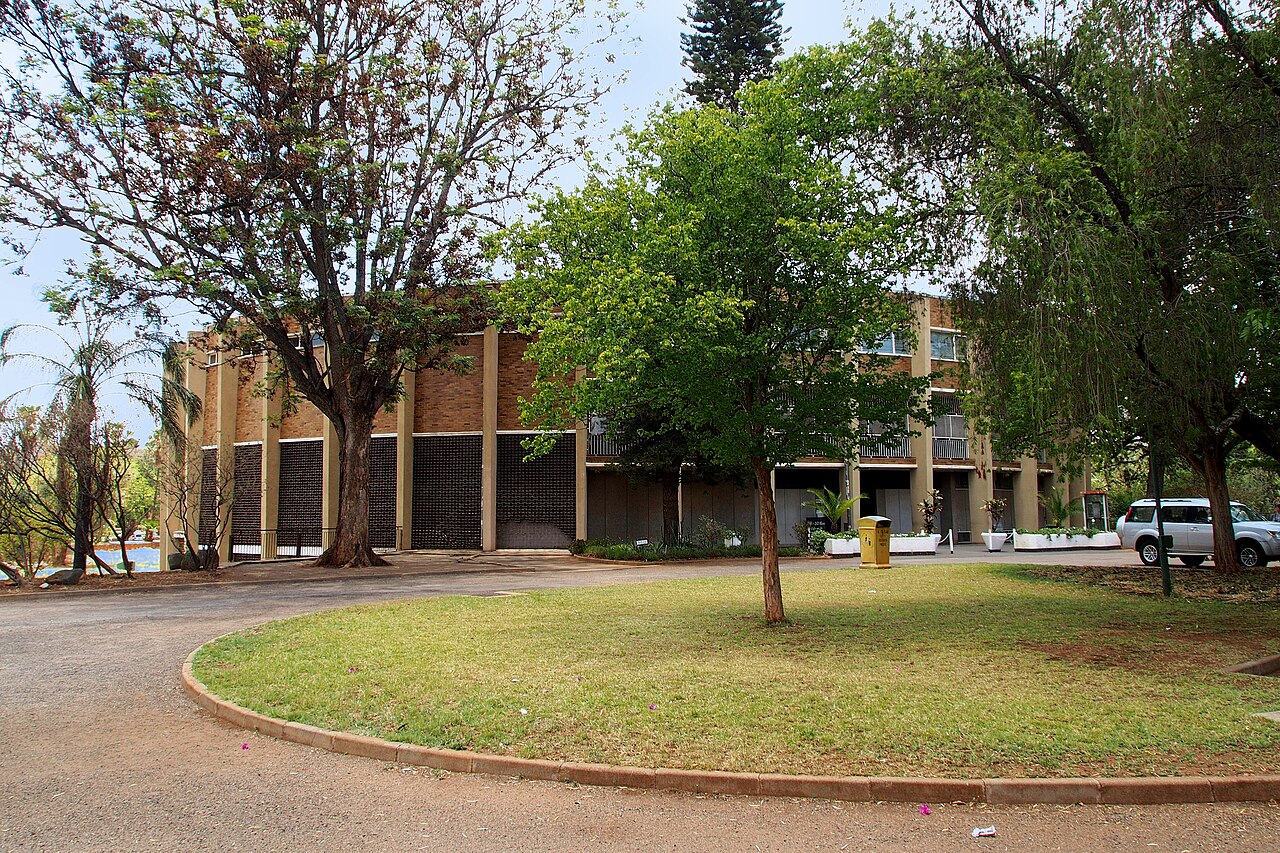
Natural History Museum of Zimbabwe
Overview
The Natural History Museum of Zimbabwe stands on Leopold Takawira Avenue in Bulawayo. Designed by James Whalley, it opened its doors to visitors in 1964 as a hub for showcasing the nation's natural history and mineral wealth. The museum is distinguished not only by its extensive collections but also by housing the world’s second-largest mounted elephant.
Facilities
The museum offers visitors nine public galleries, each dedicated to different aspects of Zimbabwe's natural heritage. A lecture hall can accommodate up to 120 guests for educational talks and presentations. Additionally, the facility includes a cafeteria for refreshments and eight research departments that actively engage in studies across various scientific disciplines.
Research Departments
The museum's research departments cover a wide range of fields including arachnology, entomology, ornithology, mammalogy, herpetology, ichthyology, paleontology and geology, as well as archaeology. These departments house significant collections that support ongoing scientific investigations.
Historical Development
The museum's history began in 1901 when Cecil Rhodes was approached by the Rhodesia Scientific Board to establish a space for their mineral collection. It started at what is now the Bulawayo Public Library before moving to various locations, including the Congregation Chapel and the Parcels Office on Fort Street.
Transformation
Over time, the institution underwent several name changes, reflecting its evolving role. In 1981, it was renamed the Natural History Museum of Zimbabwe to better reflect its focus on natural sciences after the National Museums and Monuments reorganised operations.
Source: Wikipedia
Reviews
No reviews yet. Be the first!