


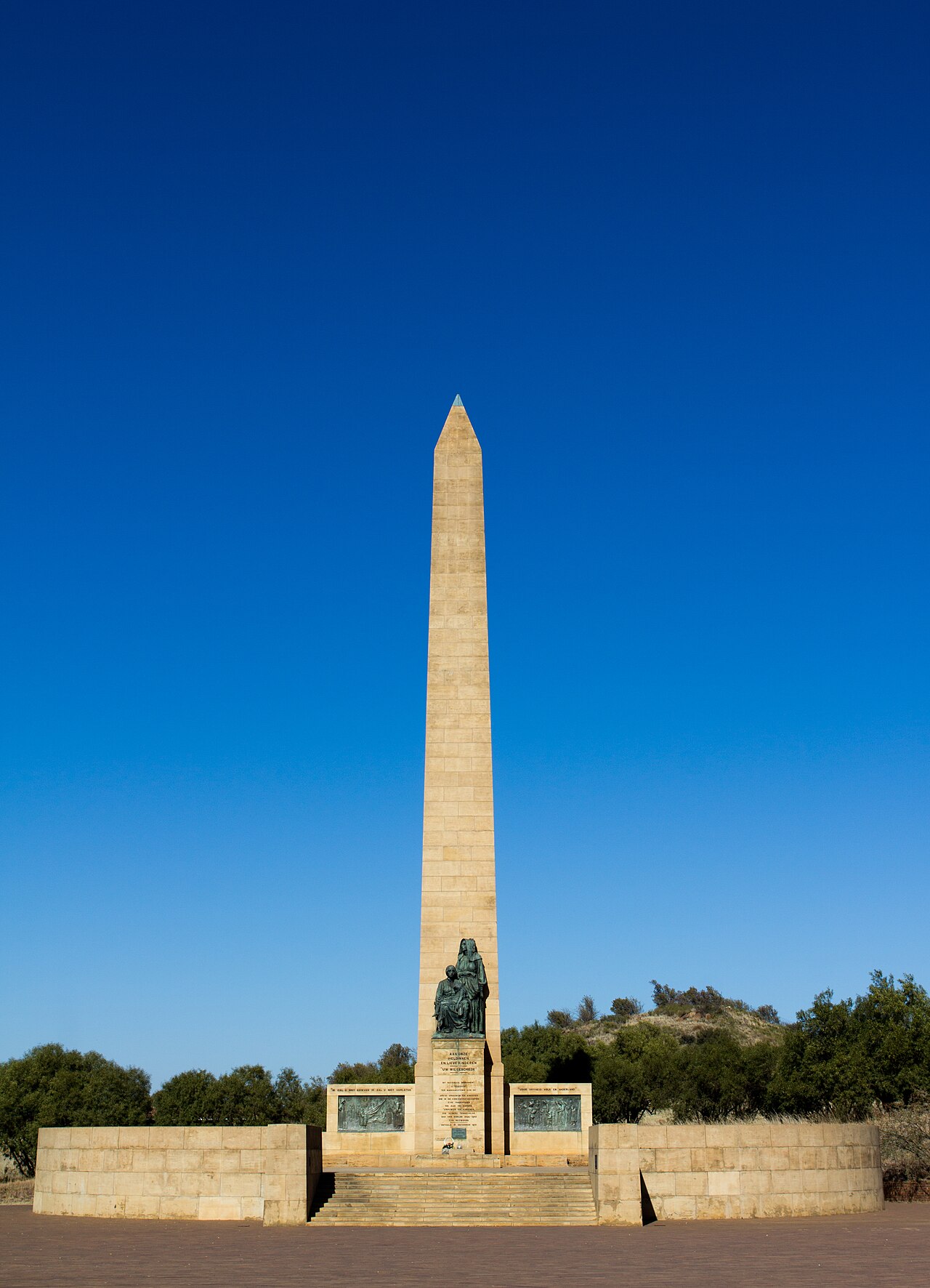
National Women's Monument
Historical Context
The monument stands as a tribute to approximately 27,000 Boer women and children who died in British concentration camps during the Second Boer War. It is located in Bloemfontein, South Africa, and recognised as a Provincial Heritage Site within the Free State.
Architectural Design
The monument was designed by Pretoria architect Frans Soff with sculptures crafted by Anton van Wouw. The structure comprises an obelisk around 35 metres high and low, semi-circular walls on either side. At its heart is a bronze sculpture group based on Emily Hobhouse's sketches of her experiences in the Springfontein camp.
The Sculpture Group
The central bronze sculpture depicts two grieving women and a dying child, capturing the sorrow experienced by those interned. One woman holds an emaciated child while another reaches out to call upon God for help. Hobhouse's original vision aimed to convey profound suffering beyond words.
Hobhouse, however, was critical of the final sculpture, feeling it did not adequately capture the severity and despair of the scene she witnessed.
Significance and Controversy
The monument has been a significant site for commemorating the sacrifices made during the war. However, its national recognition was delayed due to controversy surrounding it. In contrast, the Voortrekker Monument in Pretoria received more widespread acclaim when it was unveiled 36 years later.
Source: Wikipedia
Reviews
No reviews yet. Be the first!