


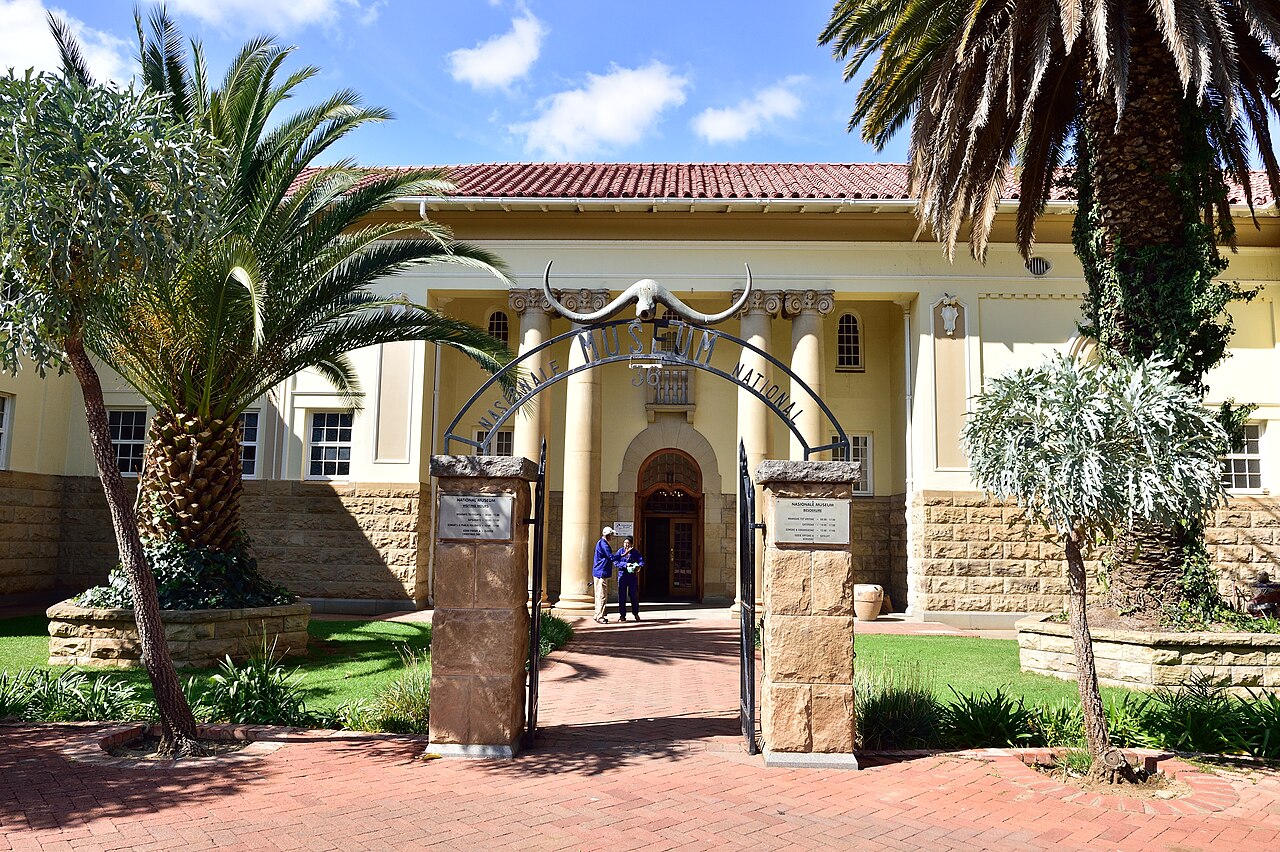
National Museum, Bloemfontein
The National Museum in Bloemfontein traces its origins to the 1870s when it began showcasing global rarities. Officially founded on 20 July 1877, it opened its doors to visitors on May 20, 1878. Initially housed in the Raadsaal building provided by the Free State Volksraad, a new museum structure was completed in 1913 and officially inaugurated two years later. Since 1881, government subsidies have largely supported its operations. Over time, through donations, acquisitions, and exchange agreements, the Museum's collections expanded to include diverse artefacts from natural and human sciences.
The institution has grown into a place of international significance, focusing on natural history, cultural heritage, and art. It conducts extensive research in these areas and offers educational programmes that engage visitors with enriching experiences. The Museum comprises 13 research departments, an Art Museum, an Education Department, Information Services, Administration, and technical sections.
Among its satellite institutions are the Oliewenhuis Art Museum, Freshford House Museum, the First Raadsaal, Wagon Museum, and Florisbad Quaternary Research Station. The Oliewenhuis Art Museum, established in 1941 as a residence for the Governor-General of South Africa, now houses an exclusive collection of South African art including paintings by Pierneef and Thomas Baines. Freshford House, built in 1897, was restored to its former glory after being acquired by the National Museum in 1982. The First Raadsaal and Wagon Museum are located together, with the former serving as a school and assembly hall before becoming part of the museum complex.
Source: Wikipedia
Reviews
No reviews yet. Be the first!