


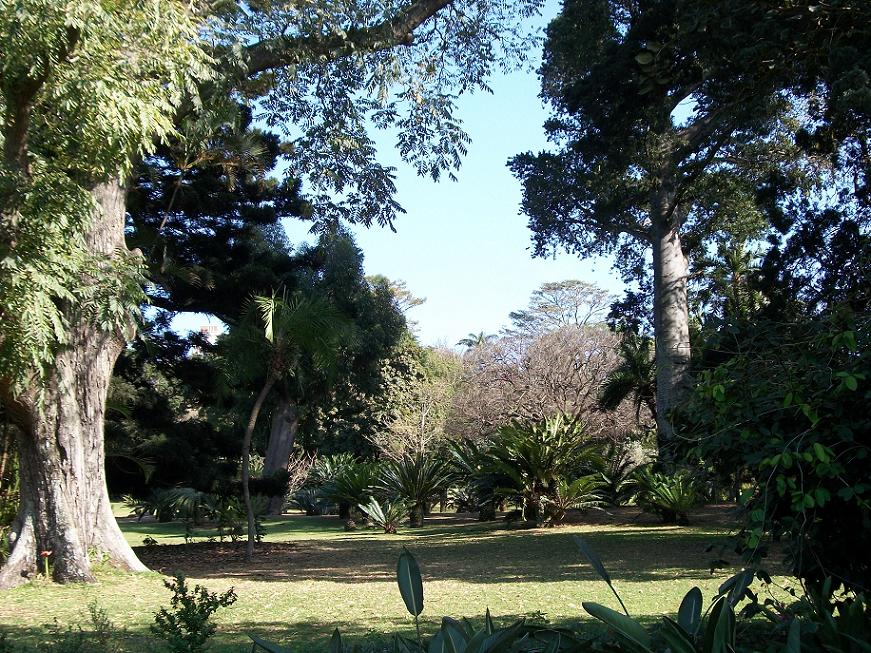
Durban Botanic Gardens
Introduction
The Durban Botanic Gardens occupies a significant position in the city of Durban as its oldest public institution and Africa's most enduring botanical garden. Spanning an area of 37 acres, it thrives in a subtropical environment.
Historical Background
Founded in December 1849 by Dr Charles Johnston, the gardens initially aimed to support Kew Gardens' global botanical network. After Johnston's early departure following his wife’s death in 1850, Mark McKen took over and moved the garden closer to town in 1851, where it remains today.
Key Figures
John Medley Wood, a self-taught botanist, significantly contributed to the gardens' development from 1882 to 1913. He established the Natal Government Herbarium and discovered numerous plant species, including the now iconic Wood's Cycad (Encephalartos woodii).
Later Developments
Ernest Thorp took over in 1950 and was instrumental in building the orchid house named after him. During his tenure, the gardens were also known for their Canna collection and shared rhizomes with Longwood Gardens in the USA.
Modern Era
In 1999, a comprehensive survey was conducted using GIS technology to map and document the garden’s diverse flora. This initiative has helped maintain the gardens' rich biodiversity for future generations.
Source: Wikipedia
Reviews
No reviews yet. Be the first!