


Anglo-Boer War Museum
Introduction
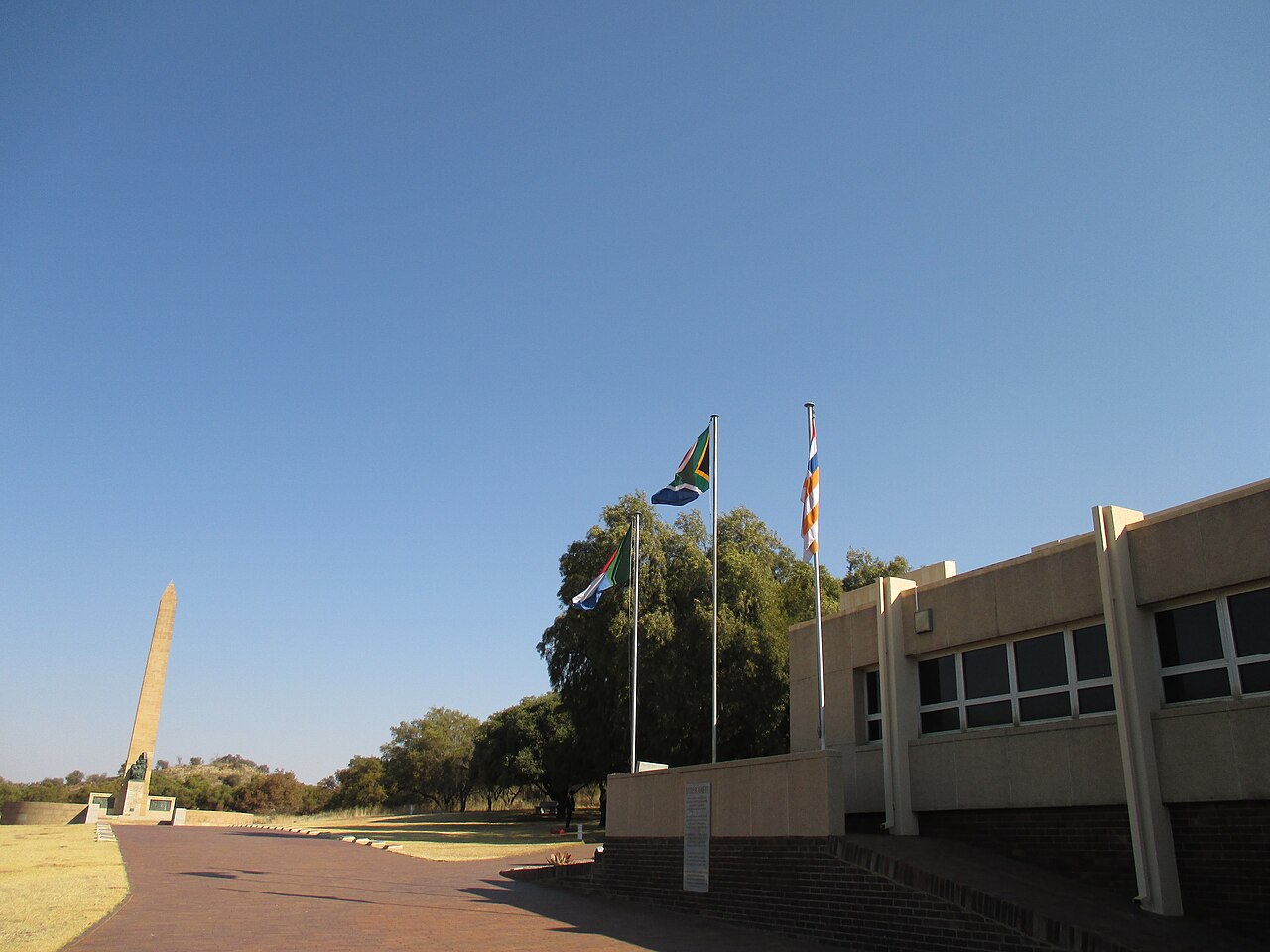
The Anglo-Boer War Museum, officially known as the War Museum of the Boer Republics, stands uniquely in Bloemfontein. It is the only museum globally that focuses exclusively on the Anglo-Boer Wars from 1899 to 1902. The museum offers a rich collection of art and exhibits, including dioramas that provide insight into the war's context. Adjacent to it is the National Women's Monument, which honours women and children affected by the conflict and was unveiled in 1913.
History of the Museum
The museum’s origins are intertwined with the creation of the National Women's Monument. In 1905, President M.T. Steyn decided to commemorate women and children who suffered during the Anglo-Boer War by building a monument in their memory. A special committee was formed after a meeting at Onze Rust farm near Bloemfontein in 1906 to pursue this idea further.
The monument's design, chosen from submissions, featured an obelisk with side panels and a central bronze sculpture group. Construction began in 1911 and the National Women's Monument was officially unveiled on December 13, 1913. Over time, the commission received numerous war-related items, leading to plans for a museum near the monument.
Museum Development
The idea of establishing a museum gained traction as donations poured in from across South Africa. Although funds were initially lacking, individuals like Gordon Fraser worked tirelessly to raise money. The design was entrusted once again to architect Frans Soff, who created a building that harmonised with the monument's aesthetics.
Construction plans were finalised by December 1929, and tenders for construction were invited. A committee was formed in late December to oversee the project, recommending Mr W.W. Peffers as the contractor. The museum’s design included sandstone elements and Burmese teak windows, providing a view of the Free State grasslands.
Completion and Expansion
The foundation stone was laid on April 26, 1930, in a ceremony attended by many, including students from the Oranje Girls’ School. By July 1930, construction was complete, and the museum began to acquire further collections of war-related items.
Source: Wikipedia
Reviews
No reviews yet. Be the first!