


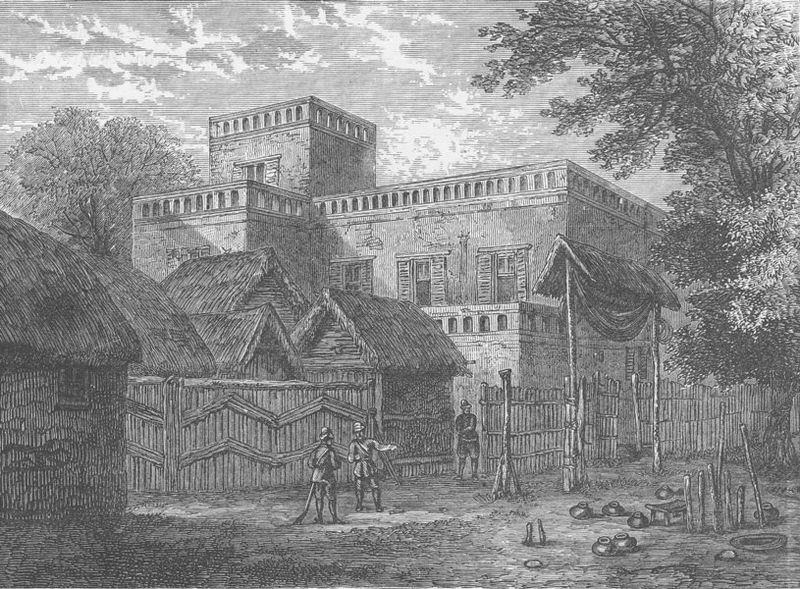
Aban Palace
Introduction
The Aban Palace was constructed in 1822 under the reign of Asantehene Osei Bonsu. It served as both a residence for the king and a museum showcasing his extensive collection of arts and crafts. The materials and labour were provided by the Dutch at Elmina, including Fante stonemasons.
Construction Details
The palace was built with inspiration from European castles like Cape Coast Castle and drawings of English architecture given to Osei Bonsu. The king expressed a desire for the building to be grand, adorned with gold, ivory, and brass, reflecting his status as a powerful ruler.
Historical Significance
Thomas Birch Freeman documented the palace's interior in 1841, noting its collection of gold-handled swords and glassware. By mid-century, it had fallen into disrepair but was later renovated by Asantehene Kofi Karikari. The building was eventually destroyed during the British invasion in 1874.
Destruction and Aftermath
Following its destruction, the palace's stone remains were used to construct a British fort in 1896. This structure was later destroyed during an armed rebellion against the British until it was replaced by another fort that now serves as the Armed Forces Museum.
Source: Wikipedia
Reviews
No reviews yet. Be the first!